

Security lines have a way of turning small questions into big worries. That elegant bottle of scent in your bag can become a point of stress if you are not sure what ‘travel size’ really means, raising the question: what is the travel size for perfume? The good news: you can bring perfume on a plane, and the rules are straightforward once you know them. You will also find a few smart tricks here to carry fragrance without leaks or hassles.
What travel size really means for fragrance
In the United States, perfume is treated like any other liquid at security. The familiar 3-1-1 policy applies: containers up to 3.4 ounces, which equals 100 milliliters, must fit in a single quart-sized, resealable, clear bag, and each traveler gets one bag. Perfume, cologne, body mists, hair perfume, aftershave, and similar products all fall into this category.
Container size is what matters, not how much liquid is inside. A beautiful 150 milliliter bottle that is half full still counts as 150 milliliters. It will not make it through the checkpoint in your carry-on. This is the rule that catches people off guard more than any other.
If you use TSA PreCheck, the policy is the same. You may not have to remove your shoes, but your liquids still need to comply and be packed in that quart-sized bag.
For checked baggage, the limits are different. The FAA treats perfume as a toiletry article. You can place larger bottles in your checked bag within the standard hazardous materials limits for toiletries: each container up to 500 milliliters or 0.5 kilograms, and a combined total not exceeding 2 liters or 2 kilograms per person. That is enough for most trips, even if you pack multiple bottles.
The 3-1-1 rule in real life
Let’s take a quick walk through the checkpoint scenario, focusing on travel size perfume options. You have a 10 milliliter travel atomizer and a small 30 milliliter eau de toilette. Both are placed in a quart-sized clear bag with your other liquids, creams, and gels. That bag goes in a bin or on the belt, depending on local procedures. After screening, you repack and go.
Body sprays and hair mists count the same as perfume. If a product is a spray can, it is still allowed as a toiletry in small sizes, but it must sit in that same quart bag for carry-on. TSA officers do not test alcohol content for perfume at the checkpoint. The concern is the size of each liquid container and keeping screening efficient.
- Container limit: Up to 3.4 ounces or 100 milliliters per bottle in carry-on
- Bag limit: All your small liquids must fit in one quart-sized, clear, resealable bag
- Per traveler: One liquids bag per person, including children
- Common items: Perfume, cologne, aftershave, body spray, hair perfume, rollerballs with liquid
- Not restricted by 3-1-1: Solid perfume or cologne balms, fragrance wipes
Carry-on versus checked baggage
Carry-on simplifies access and avoids broken glass in the hold. Checked luggage allows larger sizes, within set limits. The table below summarizes the typical rules that apply in many regions. Always check your airline and local authority before you fly, especially for connections.
| Scenario | Carry-on limit | Checked baggage limit | Notes |
|---|---|---|---|
| United States | Up to 100 ml per container, all containers in one quart bag | Up to 500 ml per container; 2 liters total for toiletries | FAA toiletry limit applies to perfume, aerosols, gels |
| European Union and UK | Up to 100 ml per container, all containers in one 1-liter bag | Generally up to 500 ml per container; 2 liters total for toiletries | Security bag is 1 liter; rules closely mirror IATA guidance |
| Canada | Up to 100 ml per container, all in one 1-liter bag | Up to 500 ml per container; 2 liters total for toiletries | CATSA follows the 100 ml rule |
| Australia and New Zealand | Up to 100 ml per container, all in one 1-liter bag | Up to 500 ml per container; 2 liters total for toiletries | Similar screening standards at major airports |
| Many other regions | Often 100 ml per container in a sealed bag | IATA-aligned, but check airline and local law | Details can vary by airport |
A quick note on quantities. If you plan to check several bottles, do not exceed the combined 2 liters of toiletry products per person. This total includes all toiletries classed as flammable or aerosol, not only perfume.
International and duty-free nuances
If you buy perfume at duty-free after security, you can carry larger bottles on that flight. When you have a connection, the rules tighten. To be accepted at the next checkpoint, your purchase must be sealed in a secure tamper-evident bag (often labeled STEB) with a visible receipt dated within the past 48 hours. Keep the bag sealed until you reach your final destination.
This matters most when you enter the United States from abroad and connect to another domestic flight, or when you transit through airports with separate security for transfers. Officers may need to see the intact bag and receipt. If the bag is opened, the bottle will be treated like any other liquid and could be subject to the 100 milliliter limit. When in doubt, ask the cashier to seal the purchase correctly and pack the receipt against the window of the bag.
Not traveling internationally? Domestic duty-free is rare, and most purchases happen before check-in or after landing, which means the standard limits apply. If a gift exceeds 100 milliliters and you are not buying it airside post-security, place it in checked luggage.
Packing strategies that prevent leaks
A great travel day can sour fast if a favorite scent saturates a sweater. Pressure changes in flight can draw a little liquid through a spray mechanism. You can prevent this with a few simple steps.
- Decant into a 5 to 10 ml atomizer
- Wrap the sprayer with tape and add cling film under the cap
- Use a small hard case or eyeglass case for fragile bottles
- Keep fragrances upright inside a toiletry pouch
- Double-bag liquids with a zip bag inside a second bag
- Choose travel bottles with a screw top and tight gasket
If you decant, use a funnel or a syringe-style transfer tool. Rinse new atomizers first with isopropyl alcohol, then with a little distilled water, and let them air dry. That prevents residue from altering the scent. Label each decant with the fragrance name and date so you can track freshness.
Alternative formats for fragrance on the go
Solid perfume and cologne balms are friendly to security and tough to break. Since they are not liquids, they do not belong in your quart bag and do not count toward the 100 milliliter limit. The scent payoff can be softer, which suits shared spaces.
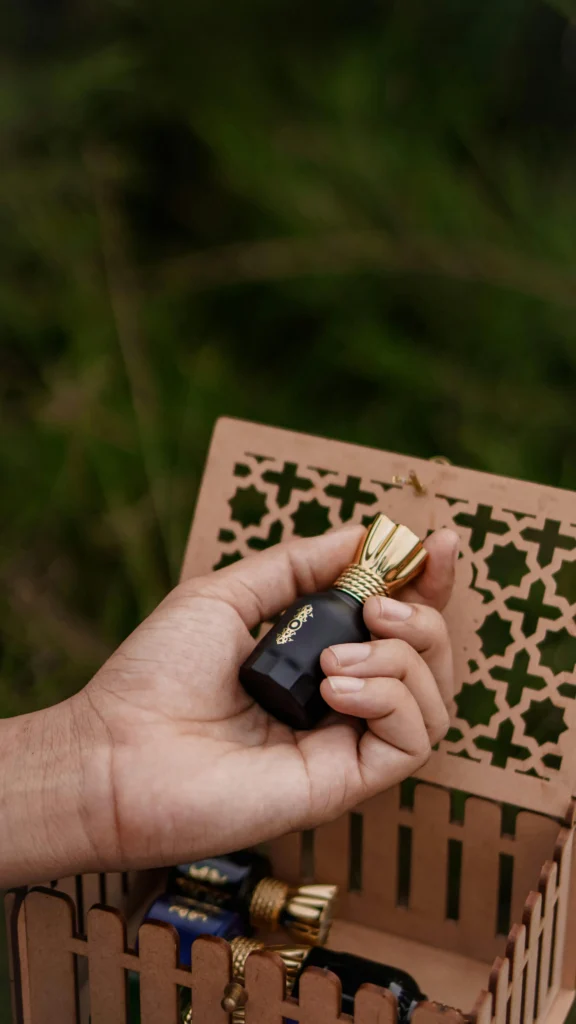
Rollerballs and travel size perfume are convenient and often come in 7 to 10 milliliter sizes, but if you’re wondering what is the travel size for perfume, these are generally designed to be within airline security limits. Keep in mind they still count as liquids. For those who prefer a mist, slim spray pens at 8 or 10 milliliters slip easily into a pocket and keep you within limits.
Fragrance wipes are another option. TSA treats wet wipes differently from liquids, so you can carry them outside the quart bag in the United States. They are easy to use mid-flight and reduce the risk of leaks. If you are connecting through airports abroad, check local rules since interpretations can differ.
Some travelers carry lightly scented hair oils or leave-in sprays to refresh later in the day. They behave like any other liquid at the checkpoint, so size them to 100 milliliters or less for carry-on.
Common pitfalls and how to avoid them
Even seasoned flyers get tripped up by small details. These quick reminders save time in line and headaches at the gate.
- Half-full large bottles: Still not allowed in carry-on if the container exceeds 100 milliliters
- Unlabeled decants: Add a label with the name and decant date to avoid confusion with medical liquids
- Leaky atomizers: Pressure can push fragrance through a pump; tape, cling film, and upright packing help
- Gifts at check-in: Place oversize bottles in checked luggage or buy airside in a sealed bag
- Mixing aerosols and perfume: All toiletry aerosols count toward checked baggage totals
- Relying on status: TSA PreCheck or priority security does not change liquid limits
Sizing guide for common bottles
Curious about those familiar sizes you see at the counter and what is the travel size for perfume? 50 milliliters is roughly 1.7 ounces. A travel size perfume of 30 milliliters is about 1 ounce. Both are carry-on friendly. The 100 milliliter bottle that anchors many lines sits right at the limit. Anything larger belongs in checked baggage or in a sealed duty-free bag if purchased airside.
Travel atomizers typically hold 5 to 15 milliliters. Two atomizers at 10 milliliters each give you variety without pressure to commit to a full bottle. If you are on a long trip, a combination of one 10 milliliter atomizer and one solid perfume covers daytime and evening use while staying within all rules.
Safety and flammability
Perfume contains alcohol and is flammable, which is why those toiletry quantity limits exist in checked baggage. Out of caution, keep fragrances away from heat sources and do not spray near a galley or in a lavatory with hot surfaces. Airline cabins are controlled spaces, and basic care goes a long way.
If you carry rare or expensive bottles, consider a small hard-sided case and wrap the bottle in soft clothing. Cabin pressure and temperature shifts are not extreme in the hold, but glass can chip against zippers or buckles inside a packed suitcase.
Etiquette and staying power on travel days
Fragrance should be a delightful accent, not a fog that lingers three rows back. Two sprays, max, is a practical rule for tight spaces. If you want more presence after you land, refresh before your meeting or dinner.
Longevity starts with prep. Moisturize with an unscented lotion wherever you will apply your scent. Well-hydrated skin holds aroma longer. Aim for pulse points like the base of the throat or inner elbows, then give your clothes a light pass from a distance if the fabric will not stain. A travel atomizer makes touch-ups easy without carrying a full bottle.
There is also a cultural layer. Some regions prefer subtler sillage. A restrained approach signals respect for fellow travelers and helps you enjoy your scent rather than battle it.
If you remember nothing else, keep your carry-on fragrances at 100 milliliters or less per container, place them in a quart bag, and label your decants. Larger bottles ride in checked luggage, capped tight and cushioned. With that, you can fly with scent and skip the guesswork.
FAQ: Travel Size for Perfume
Traveling with your favorite perfume should enrich your journey, not complicate it. Here, we answer some common questions about flying with fragrances while staying within TSA guidelines. Stay inspired and informed!
What is the TSA travel size limit for perfume?
Each perfume container must be 3.4 ounces (100 milliliters) or less for carry-on luggage.
Can I carry multiple perfume bottles in my carry-on?
Yes, as long as all bottles fit within a single quart-sized, clear, resealable bag.
Do checked baggage restrictions apply to perfume?
Yes, for checked baggage, each bottle can be up to 500 milliliters, with a total not exceeding 2 liters per traveler.
Does buying perfume at duty-free affect size limits?
Perfumes bought at duty-free can be larger if carried in a secure, tamper-evident bag with the receipt visible.
How can I prevent perfume leaks in my luggage?
Use travel atomizers, seal sprayers with tape, and store bottles upright to avoid leaks.
Are there alternatives to liquid perfumes for travel?
Solid perfumes and fragrance wipes are TSA-friendly alternatives that don’t count toward liquid limits.
What is the travel size for perfume?
